
What Is an SEO Site Audit, and Why Is It Important?
In today’s competitive digital landscape, simply having a website is not enough. If your site isn’t visible on search engines, you’re missing out on valuable traffic, leads, and sales. This is where an SEO site audit plays a critical role. A site audit helps you understand how well your website is optimized for search engines and what improvements are needed to boost performance.
In this blog, we’ll break down what a site audit is, what it includes, and why it’s essential for long-term online success.
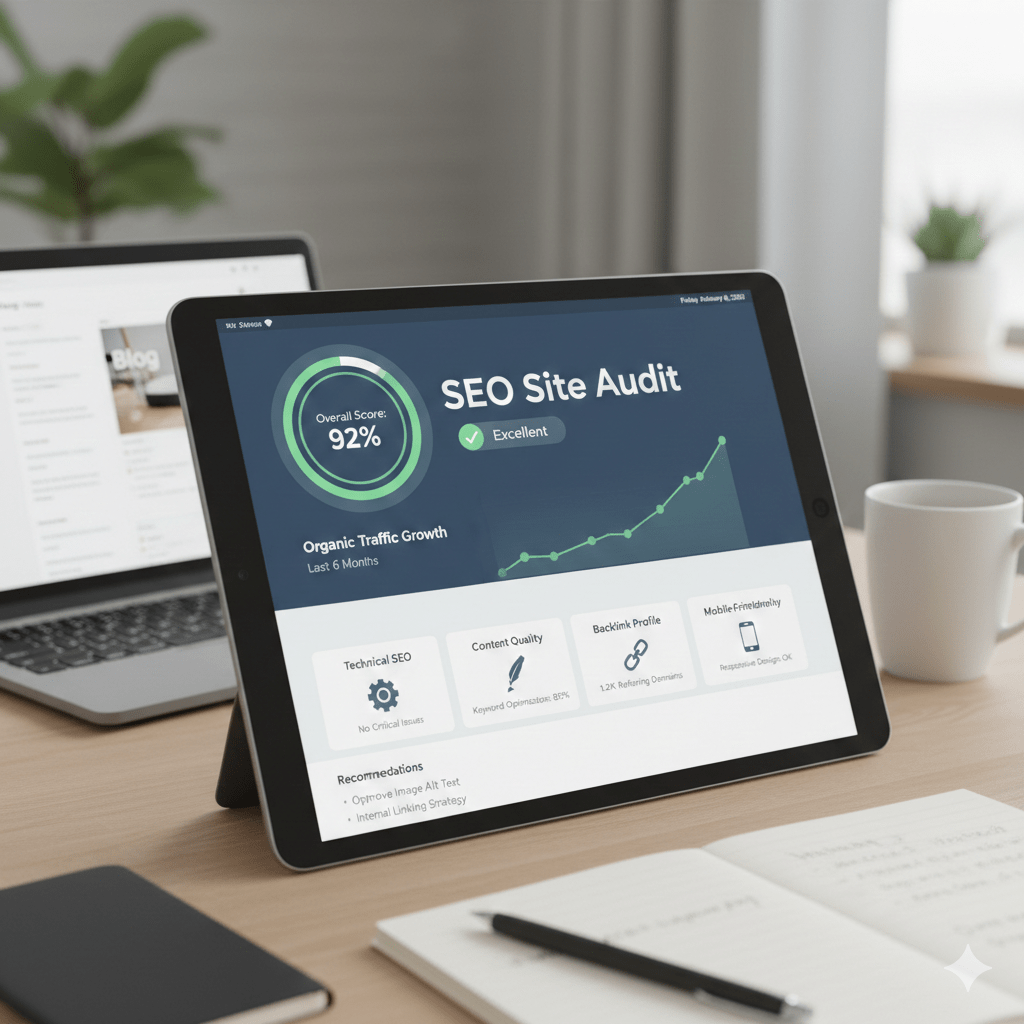
What Is an SEO Site Audit?
A site audit is a comprehensive analysis of a website’s ability to rank in search engine results pages (SERPs). It evaluates technical issues, on-page SEO elements, content quality, user experience, and off-page factors that affect your site’s visibility.
Think of it as a health check-up for your website. Just like regular medical check-ups help prevent serious issues, a regular site audit helps identify and fix problems before they impact rankings and traffic.
An effective site audit highlights:
What is working well
What is hurting your rankings
What needs immediate improvement
What opportunities you can leverage to grow organically
Key Components of an SEO Site Audit
1. Technical SEO Audit
This is the foundation of any site audit. It focuses on how search engines crawl and index your website.
Key checks include:
Website speed and performance
Mobile-friendliness
Indexing and crawl errors
XML sitemap and robots.txt
HTTPS and security issues
Broken links and redirect errors
Technical issues can block search engines from accessing your site, even if your content is excellent.
2. On-Page SEO Audit
An on-page SEO review ensures that individual pages are optimized for relevant keywords and user intent.
This part of the site audit covers:
Title tags and meta descriptions
Header tag structure (H1, H2, H3)
Keyword usage and placement
URL structure
Image alt text
Internal linking
Proper on-page optimization helps search engines understand your content and rank it accurately.
3. Content Audit
Content is the heart of SEO. A content audit evaluates the quality, relevance, and performance of your existing content.
It checks:
Duplicate or thin content
Keyword cannibalization
Content freshness
Search intent alignment
Readability and engagement metrics
A strong site audit helps identify content gaps and opportunities to update or repurpose existing pages for better rankings.
4. User Experience (UX) Audit
Search engines prioritize user-friendly websites. Poor user experience can increase bounce rates and hurt rankings.
UX factors reviewed in a site audit include:
Page load time
Navigation structure
Mobile usability
Core Web Vitals
Call-to-action placement
Improving UX not only helps SEO but also boosts conversions.
5. Off-Page SEO & Backlink Audit
Backlinks remain a major ranking factor. This part of the site audit analyzes your website’s backlink profile.
It evaluates:
Quality of backlinks
Toxic or spammy links
Anchor text distribution
Competitor backlink gaps
Cleaning up harmful backlinks and building high-quality ones strengthens your site’s authority.
Why Is an SEO Site Audit Important?
1. Identifies Hidden SEO Issues
Many SEO problems are not visible on the surface. An site audit uncovers technical errors, indexing problems, and content issues that silently affect rankings.
2. Improves Search Engine Rankings
By fixing errors and optimizing pages based on audit insights, your website becomes more search-engine friendly, leading to better rankings and increased visibility.
3. Enhances User Experience
A well-executed site audit improves site speed, navigation, and usability—key factors that keep users engaged and reduce bounce rates.
4. Helps You Stay Ahead of Competitors
SEO is constantly evolving. Regular audits help you adapt to algorithm updates and stay competitive in your niche.
5. Maximizes ROI from SEO Efforts
Without an site audit, your SEO strategy may be based on assumptions. Audits ensure your time, effort, and budget are focused on what truly delivers results.
How Often Should You Perform a Site Audit?
Ideally, you should conduct a site audit:
Every 3–6 months for active websites
After major website updates or redesigns
When traffic or rankings drop suddenly
Before launching a new SEO campaign
Regular audits ensure consistent performance and long-term growth.
Final Thoughts
An SEO site audit is not a one-time task—it’s an ongoing process that keeps your website optimized, competitive, and aligned with search engine guidelines. Whether you run a small business website or a large enterprise platform, regular SEO audits are essential for sustainable online success.
By identifying weaknesses and uncovering opportunities, a site audit empowers you to make data-driven decisions that improve rankings, traffic, and conversions.
A strong SEO strategy starts with a clear understanding of your website’s health. The audit delivers actionable insights you can actually implement.
Frequently Asked Questions
The main purpose of a site audit is to identify issues affecting a website’s search engine visibility and provide actionable insights to improve rankings and performance.
Yes. Even small websites benefit from a site audit, as minor technical or content issues can significantly impact search visibility.
Depending on website size and complexity, a site audit can take anywhere from a few hours to several days.
Basic audits can be done using SEO tools, but a professional site audit provides deeper insights and strategic recommendations.
After a site audit, you implement fixes, optimize content, improve technical performance, and track results to ensure continuous growth.
